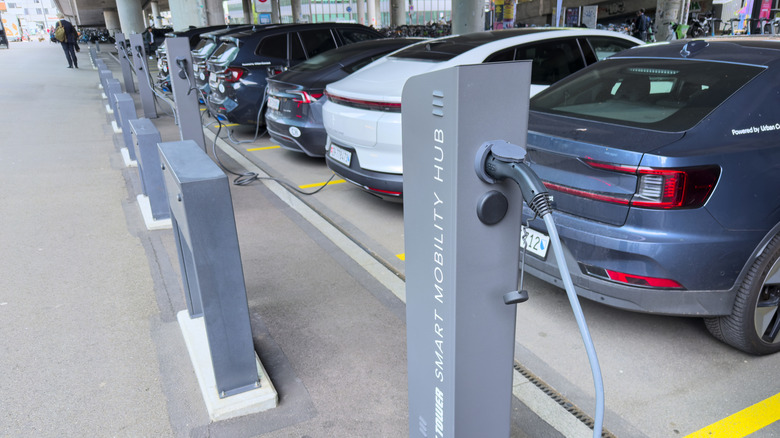
The Trump administration is quietly considering a rule change that could make it easier for polluters to build facilities—including certain gas plants and diesel generators that power data centers—with little to no notice to the public.
On Wednesday, the Environmental Protection Agency held a public hearing on a proposed rule change that would hand the power to states to decide how the public participates in the permitting process for certain new sources of air pollution. The proposed rollback comes as data centers face greater pushbackacross the US, with many communities using the permitting process to try to slow down development. Any changes could have major consequences for how ordinary people are given notice about new or expanded polluting facilities coming into their neighborhoods.
“As someone actively working in communities with data centers, I know this to be fundamentally true: People want to have a say,” Vanessa Lynch, a Pennsylvania organizer with Moms Clean Air Force, said at the EPA hearing.
Companies building any kind of facilities that release air pollution are required to get permits under the Clean Air Act. Polluting sources can either be put through a “major” permitting process, meaning that they meet or exceed thresholds for certain pollutants, or a “minor” one for those that don’t.
Major sources of pollution are reviewed by both federal and state regulators and have extensive requirements before and after construction. However, there’s less oversight of minor sources. The scope of what gets permitted as a minor source is extremely broad and can include everything from dry cleaners and auto body shops to to diesel and gas engines. The latter two are increasingly being used to power data centers, with operators such as xAI and Meta using minor source permitting processes to build behind-the-meter gas plants.
The Clean Air Act does require the public to be involved in permitting processes; Congress has specified that major sources need to have several public steps, including a public hearing. EPA rules require some public participation for minor source permits. But thanks to a patchwork of state enforcement laws, that engagement process—and whether state agencies are actually complying with EPA requirements—varies across the US.
If the proposed rule is finalized, “it would put state and local agencies most familiar with local issues in the driver’s seat to determine whether, when, and for how long to provide opportunities for public participation for proposed new minor sources and modifications,” an EPA spokesperson tells WIRED, noting the rule wouldn't alter emissions standards.
These state-by-state differences can make a big difference in how the public gets involved. Keri Powell, an Atlanta-based attorney at the environmental legal advocacy group Southern Environmental Law Center, says that groups like hers often end up taking on cases in states like Georgia, which, she says, has a more robust public notification and participation process for minor sources. Earlier this month, the group alerted the state utility about construction issues at a data center, based on information they’d gotten from the companies’ public air permit applications. But if the EPA removes the federal requirement, community and legal groups in the state could get little to no heads up about upcoming projects and be shut out of participation and review.
“Georgia is an example of a place where I can say I’m concerned,” Powell says.
Sara Lips, the director of communications at Georgia’s Environmental Protection Division, says that the agency is “determining whether proposed federal rule changes would affect the public participation requirements per the state regulations.”
Kentucky also has stronger public participation laws for minor source permits. Byron Gary, a senior attorney at the Kentucky Resources Council, says state agencies have made an “informal commitment” behind the scenes to keep their public participation rules the same, even if the EPA changes its rules. But, he says, that could shift: “Who knows [if] the next administration, whether they would actually change it.”
Texas is an example of what lower levels of engagement look like. The data center boom there has driven a massive buildout of private gas plants, many of which rely on minor pollution permits. The state’s lower levels of enforcement have left some communities living in the shadows of data centers surprised at the scope of fossil fuel infrastructure being installed near their homes.
Since coming into power, the Trump administration has gone all in on artificial intelligence, removing multiple roadblocks for data center development at the federal level. That includes efforts at the EPA, which is working to make the US “the AI capital of the world,” the agency spokesperson says.
Companies are also spending vast sums of money on the data center buildout: Spending on data center construction outpaced spending on public transportation infrastructure for the first time in June. Given that public opposition is creating a new bottleneck for data center development, the timing of the rule revision, Powell says, is probably not an accident.
“I think it's part of a package of rules that the Trump administration is pushing through to make it easier for AI data centers to be constructed,” she says.
This story originally appeared on wired.com.
Read full article
Comments
 Log in